Research
Our group studies the physics of polar and coastal ocean circulation, with an emphasis on ice-ocean interactions across scales — from the microscale turbulence that sets melt rates at glacier faces, to the mesoscale eddies and fjord circulations that deliver heat to the ice, to the coastal currents of the Carolina shelf. We combine theory, numerical modeling (idealized to realistic), laboratory experiments, and observations. Visit the Movies page to see this work in action.
Our work is organized around six connected themes.
1. Ice-Ocean Boundary Layers & Melt Physics
How does turbulence at the ice-ocean interface control melting?
At vertical boundaries between the ocean and ice — glacier faces and icebergs — the momentum, heat, and salt fluxes that drive melting are poorly represented in models, causing order-of-magnitude discrepancies in melt at the warmest glaciers. We use Direct Numerical Simulations (DNS) and Large Eddy Simulations (LES) to resolve these boundary layers and build improved melt parameterizations, tested against observations and upcoming field campaigns at LeConte Glacier, Alaska.
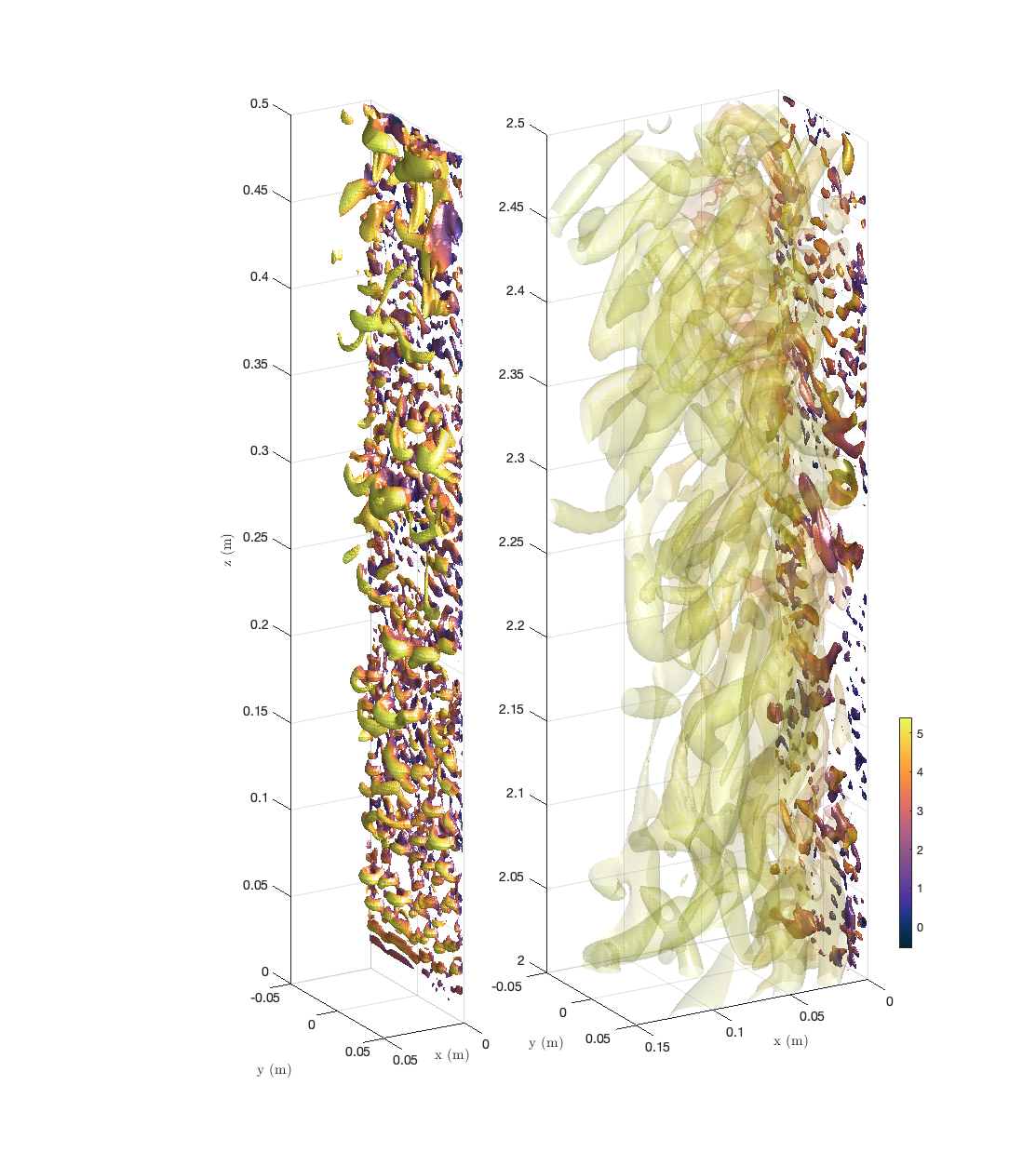
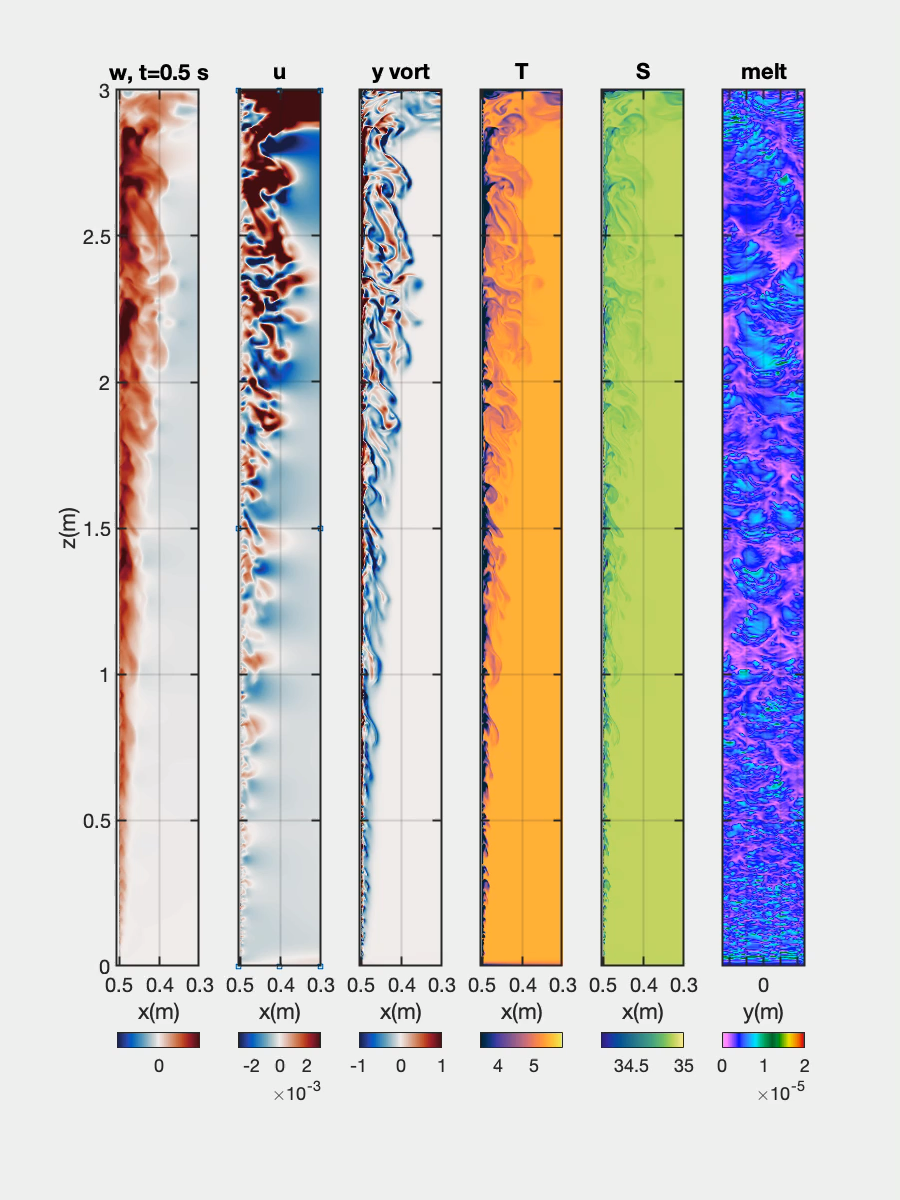
Representative work: Zhao, Chor, Skyllingstad, Nash et al. (2026, JFM, under review); Zhao, Skyllingstad & Nash (2024, GRL); and field/observational collaborations at LeConte, including Nash et al. (2024, GRL), Weiss et al. (2025, GRL), Ovall et al. (2025, JGR-Oceans), and Cohen et al. (2025, J. Glaciology).
2. Glacial Fjord Circulation & Fjord-Shelf Exchange
What controls how warm ocean water reaches Greenland’s glaciers?
Glacial fjords are long, narrow, deep inlets connecting tidewater glaciers to the open ocean. Warm, deep water flowing in from the shelf can melt the submarine faces of glaciers and drive retreat and sea-level rise. We use idealized theory and high-resolution MITgcm simulations (informed by NASA Oceans Melting Greenland observations) to understand fjord overturning, horizontal recirculation, and the standing eddies that emerge in realistic geometries and can amplify melt.
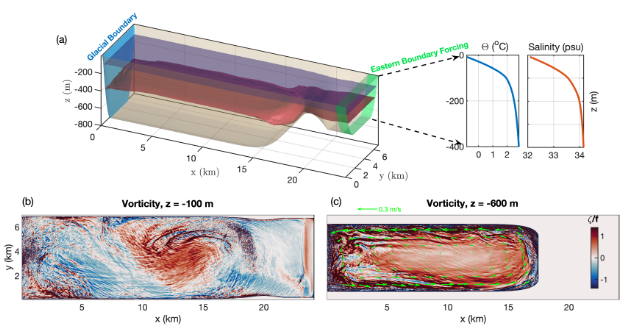
Representative work: Zhao, Straneo et al. (2026, JPO, under review; Greenland Coastal Current freshwater flux); Zhao et al. (2023, JPO; standing eddies); Zhao et al. (2022, GRL; overturning, recirculation & melt); Zhao, Stewart & McWilliams (2021, JPO; geometric constraints).
3. Ice-Shelf Cavities & Antarctic Basal Melt
How does seafloor geometry regulate melt beneath ice shelves?
Vast cavities lie beneath some of the fastest-melting ice shelves in West Antarctica and northern Greenland. At Pine Island Glacier, for example, a tall bathymetric sill holds back relatively warm water from the open ocean. We study how sill height, tides, and fine-scale topography regulate the exchange flows and meltwater plumes that set basal melt rates.
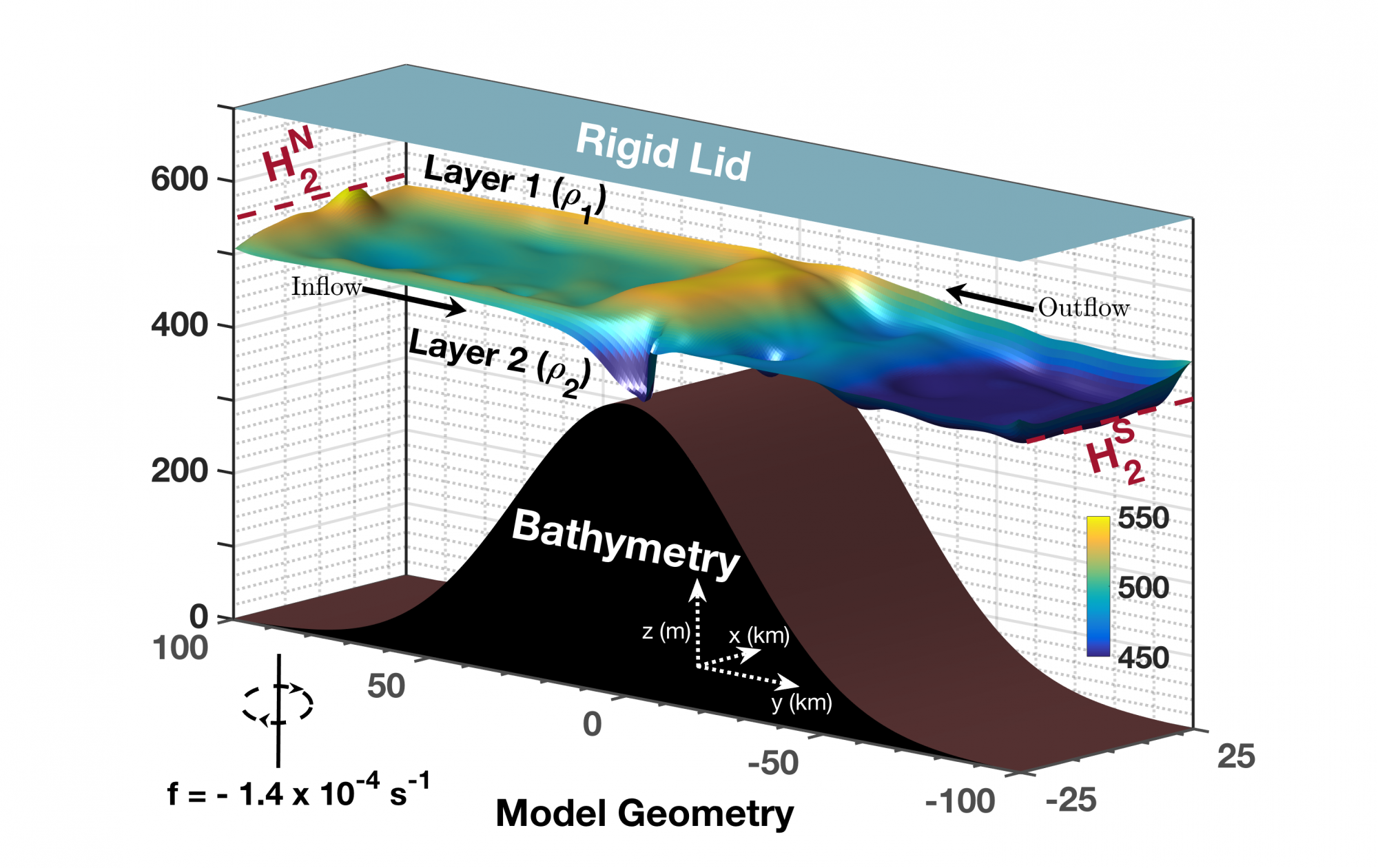
Representative work: Zhao, Stewart & McWilliams (2019, JPO; sill-influenced exchange flows); Wild, Zhao et al. (2023; variability in Antarctic ice-shelf basal melting); and ongoing sub-ice-shelf channel modeling.
4. Polar Eddies, Sea Ice & Cross-Scale Transport
How do submesoscale eddies move heat and tracers under sea ice?
Beneath and around sea ice, eddies transport heat, salt, and biology across scales. We use idealized simulations and novel observations — including marine-mammal-borne sensors — to find and understand these features in the Southern Ocean and Arctic.
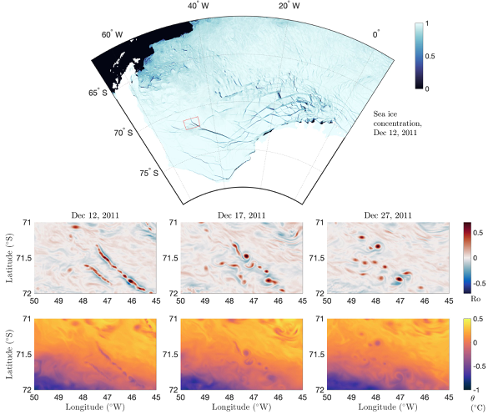
Representative work: Kosty, Zhao et al. (2025, JGR-Oceans; seal-based observations of sub-sea-ice eddies); Cohanim, Zhao & Stewart (2021, JPO; eddies generated by sea-ice leads).
5. Coastal & Shelf Dynamics
How do the Gulf Stream and shelf circulation interact along the Carolina coast?
A growing direction for the group: the dynamics of the Carolina continental shelf and its interaction with the Gulf Stream. Using high-resolution regional models (e.g., ROMS) guided by observations — including high-frequency radar coverage — we study cross-shelf exchange, submesoscale processes, and Gulf Stream-shelf interactions.
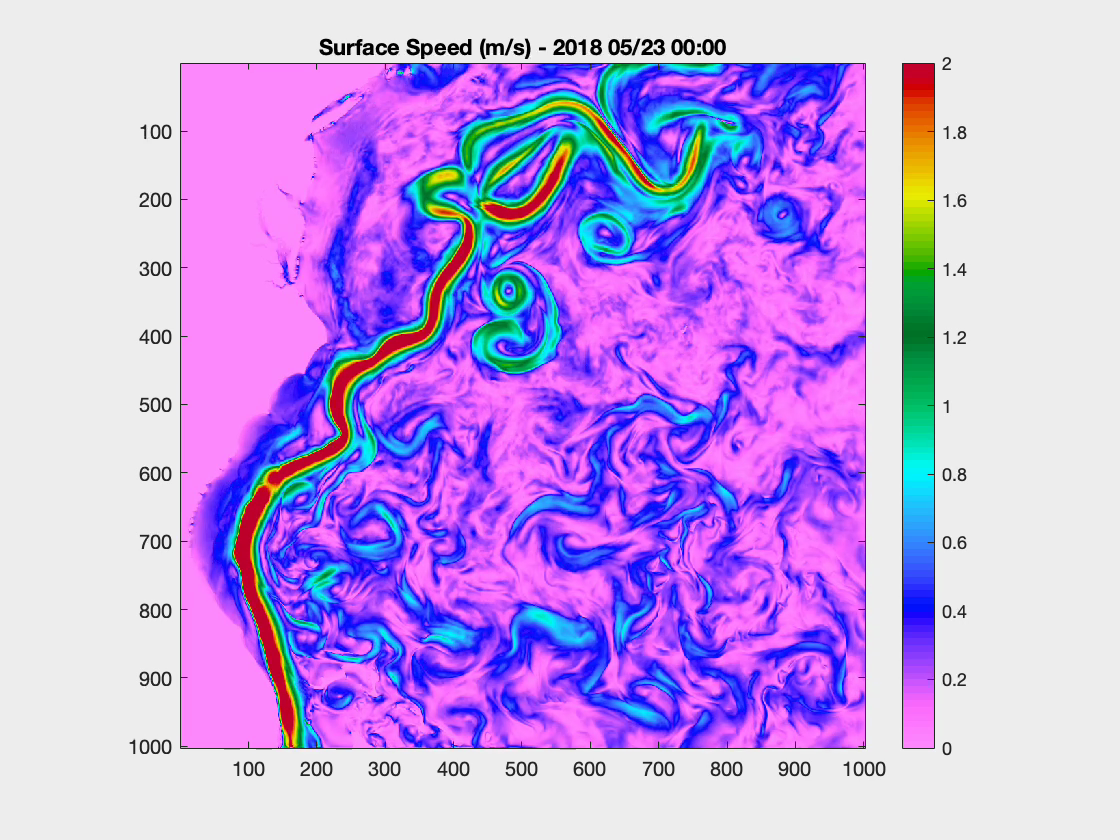
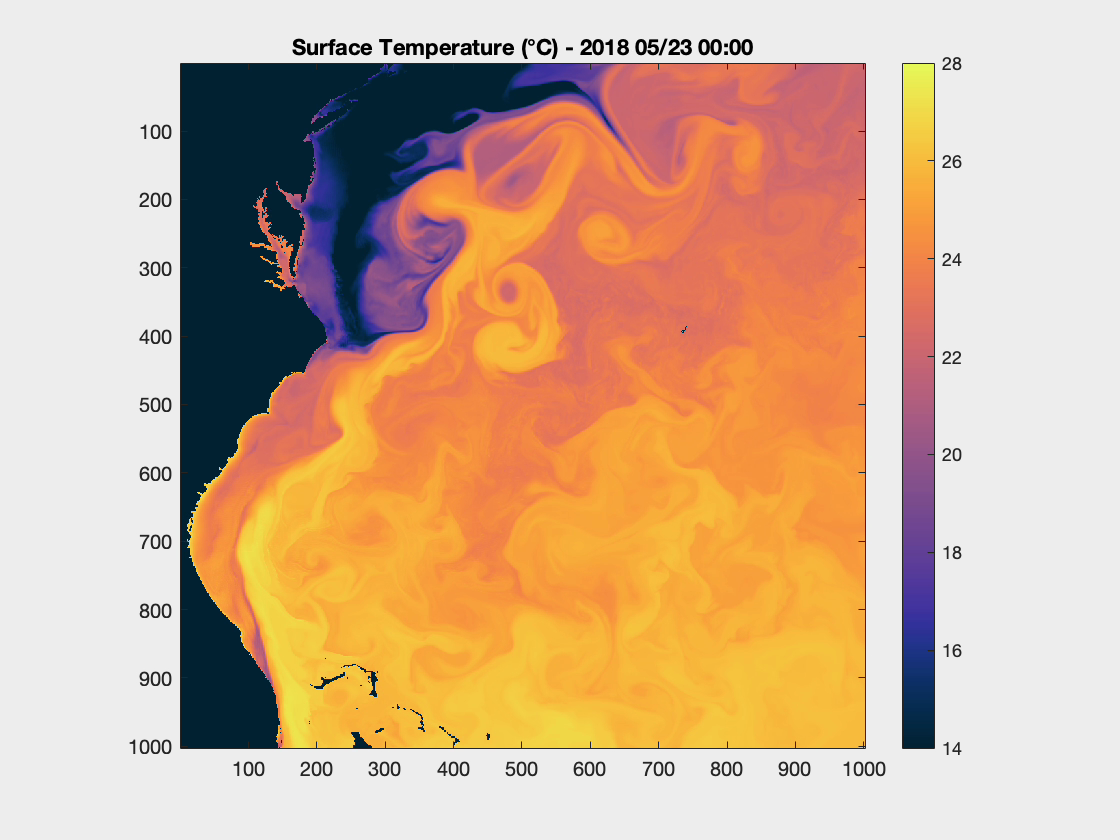
See the Movies page for animations of the Gulf Stream and shelf circulation.
6. Ice-Ocean-Biogeochemistry Coupling
How does ice-ocean physics shape fjord ecosystems and nutrient supply?
An emerging, interdisciplinary thread: how meltwater, subglacial discharge, and boundary-layer mixing control the supply of nutrients in glaciated fjords. We collaborate with biogeochemists to connect the physics of ice-ocean interaction to fjord productivity.
Representative work: Alexander, Zhao et al. (2026, JGR-Biogeosciences; subglacial drainage, lake-outburst events & fjord macronutrients); Schulz, Zhao et al. (2025, GRL; vertical nutrient fluxes in a Northwest Greenland fjord).
Laboratory Experiments
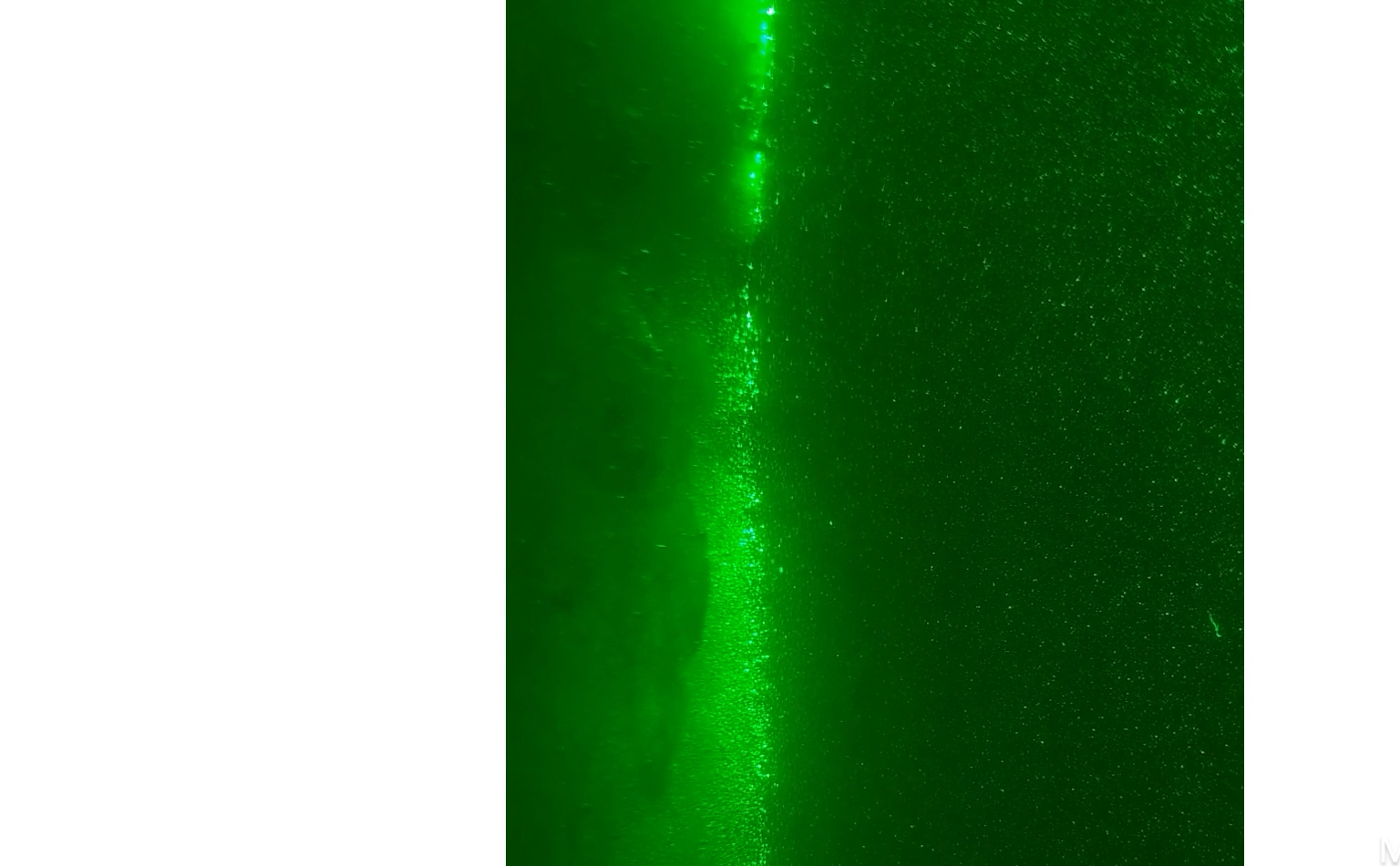
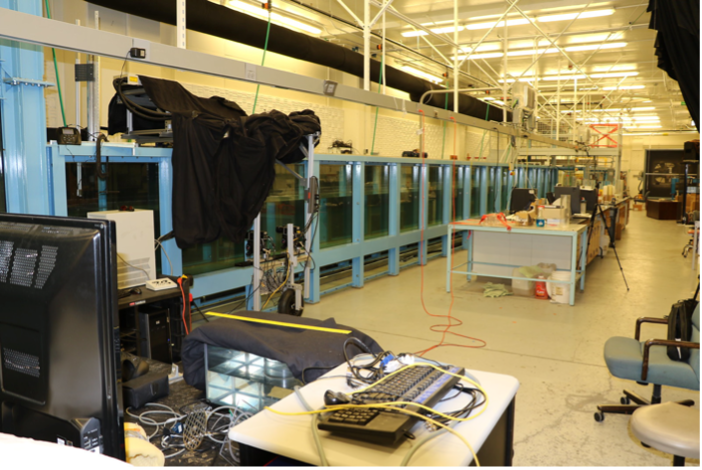
Across several themes we complement models and observations with laboratory experiments in UNC’s Joint Fluids Lab — using wave tanks and optical (laser-sheet) techniques to study ice-ocean boundary-layer processes under controlled conditions.